
Restructuring Snapp Figma files to improve efficiency for a large design team
A Structural Initiative to Enable Faster, More Scalable Work Across Snapp’s Design Team.
Background
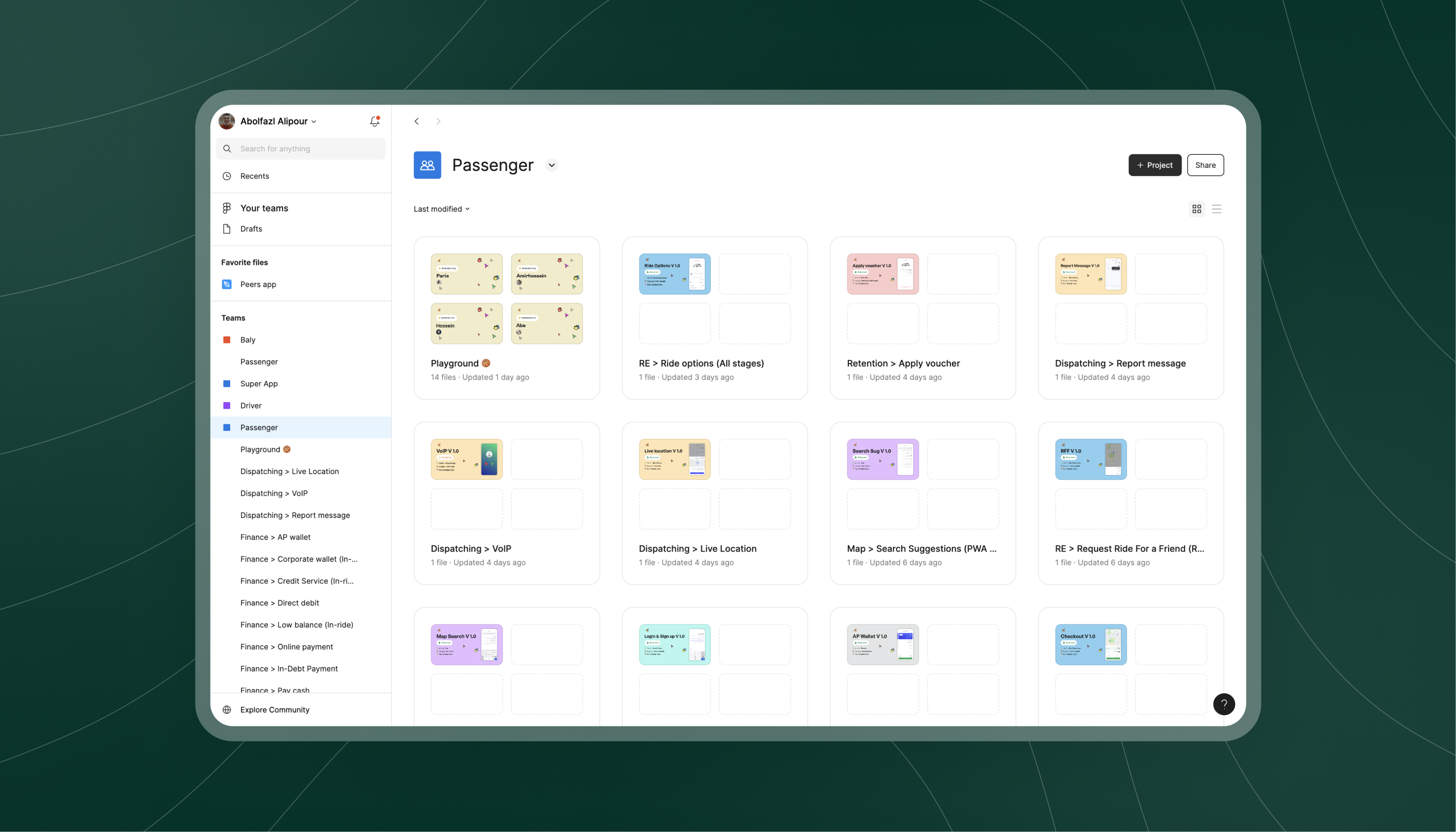
Snapp's passenger team design file had evolved into a sprawling, disorganized resource. Lacking a clear structure, it became a labyrinth of pages and components, making it increasingly difficult to locate specific designs or maintain version control. This lack of organization hindered collaboration, slowed down workflows, and led to frequent miscommunications among team members. With crucial design assets buried within the chaos, the file's usability was severely compromised, impacting the team's efficiency and overall design process.
Problem Statement
We had the following three main problems with the Figma files:
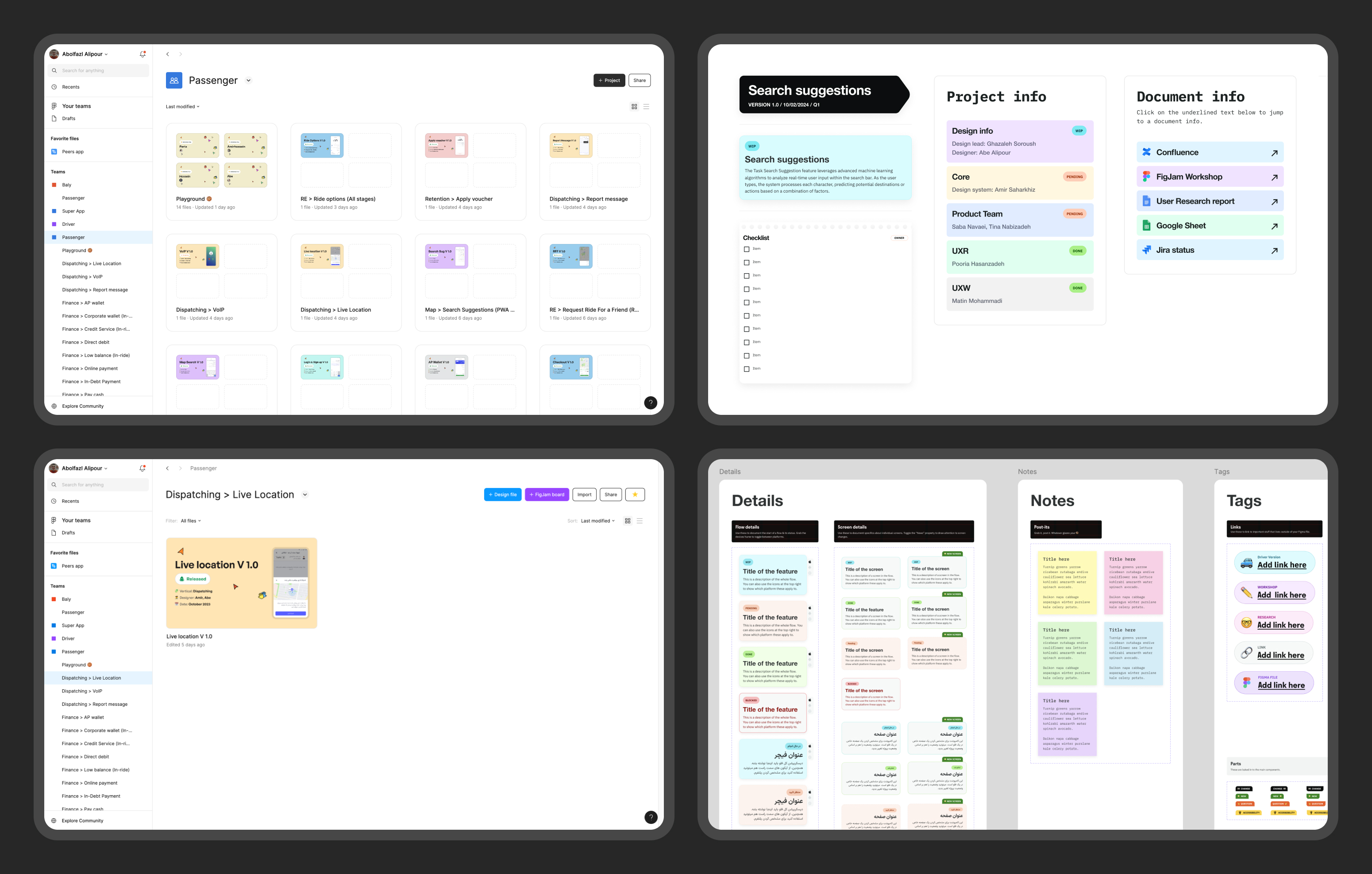
- Figma Performance Issues: The large volume and potentially disorganized state of our design files causes Figma errors, slowing down workflows and creating frustration for the team.
- Lack of clear versioning: We don't have a well-defined system for managing multiple versions of design files. This makes it difficult to track iterations, revert to earlier designs if needed, and ensure the development team always works with the most up-to-date version.
- Navigation difficulties: Our team members. frequently have trouble finding the specific Figma pages they need, leading to wasted time and potentioal miscommunications.
My Role
I led the transformation of our design team's workflow. I began by identifying pain points in our existing Figma practices through comprehensive team discussions and direct observation. This allowed me to pinpoint issues such as version control inconsistencies, disorganized pages, and the absence of a unified component library. Building upon these insights, I developed a comprehensive plan to restructure our Figma environment. I facilitated team-wide adoption through workshops and documentation, ensuring a smooth transition. By actively monitoring and iterating on the new system, we achieved significant improvements in productivity, collaboration, and overall team morale.


Conclusion
The Snapp Figma file restructure was not merely a housekeeping task; it was a strategic investment in our design team's efficiency and collaborative potential. By addressing the immediate pain points of disorganization and version control, we've laid a foundation for scalable design practices. The streamlined workflow, enhanced findability of assets, and consistent component library empower designers to focus on creativity and innovation.
Learnings 📝
- Communication is key: Open communication and consistent feedback from the design team were crucial for understanding pain points and ensuring the new structure met their needs.
- Flexibility is essential: The initial structure was a starting point, and we remained flexible to adapt and refine it based on real-world usage and evolving team requirements.
- Documentation matters: Comprehensive documentation and training sessions played a vital role in the successful adoption of the new system.
- Continuous Improvement: We recognized that a file structure is not a one-time fix. We established a process for ongoing monitoring and iteration to ensure the system remains effective as the team and its projects evolve.
Due to NDA restrictions, I am unable to share further details at this time. Please reach out if you’d like to learn more about my work.

Next Project