Elevating the Passenger Experience with Ride Preferences
Elevating the Passenger Experience with Ride Preferences
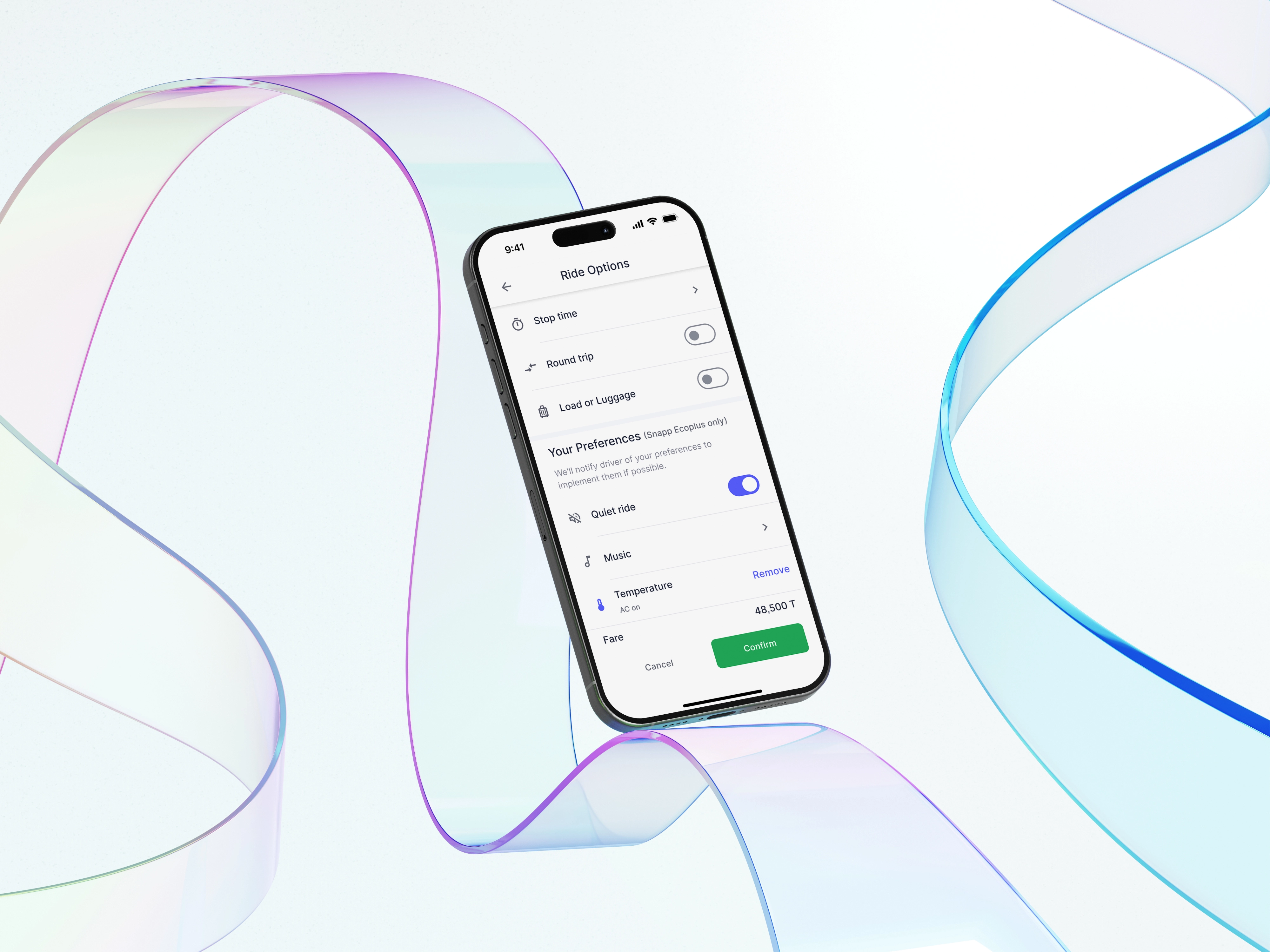
I led a user-focused initiative at Snapp to implement the Ride Preferences feature, addressing passengers’ desire for tailored ride options. By allowing users to customize their in-ride preferences, we reduced cancellation rates by 13% (linked to preference) and increased Snapp Plus usage by 2%, ultimately enhancing overall passenger satisfaction and engagement.
Outcomes
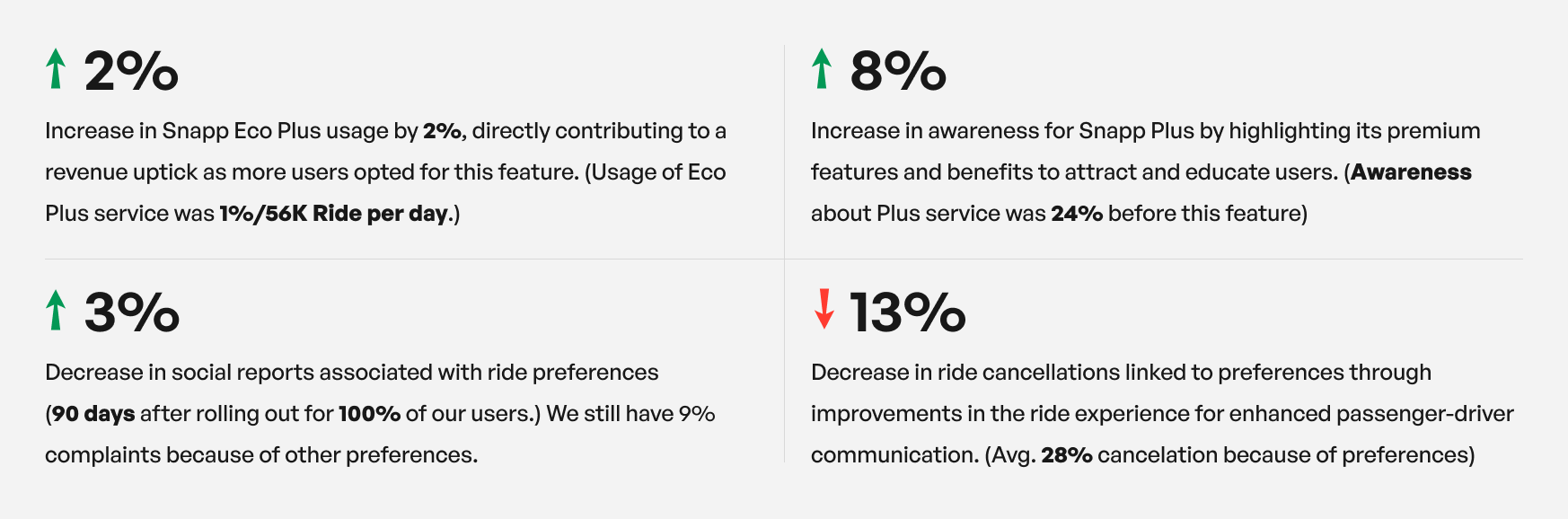
- 2% Increase in Snapp Eco Plus usage , directly by contributing to a revenue uptick as more users opted for this feature. (Usage of Eco Plus service was 1%/56K Ride per day.)
- 13% Decrease in ride cancellations linked to preferences by through improvements in the ride experience for enhanced passenger-driver communication. (Avg. 28% cancelation because of preferences)
- 8% Increase in awareness for Snapp Plus by highlighting its premium features and benefits to attract and educate users. (Awareness about Plus service was 24% before this feature)
What is Snapp?
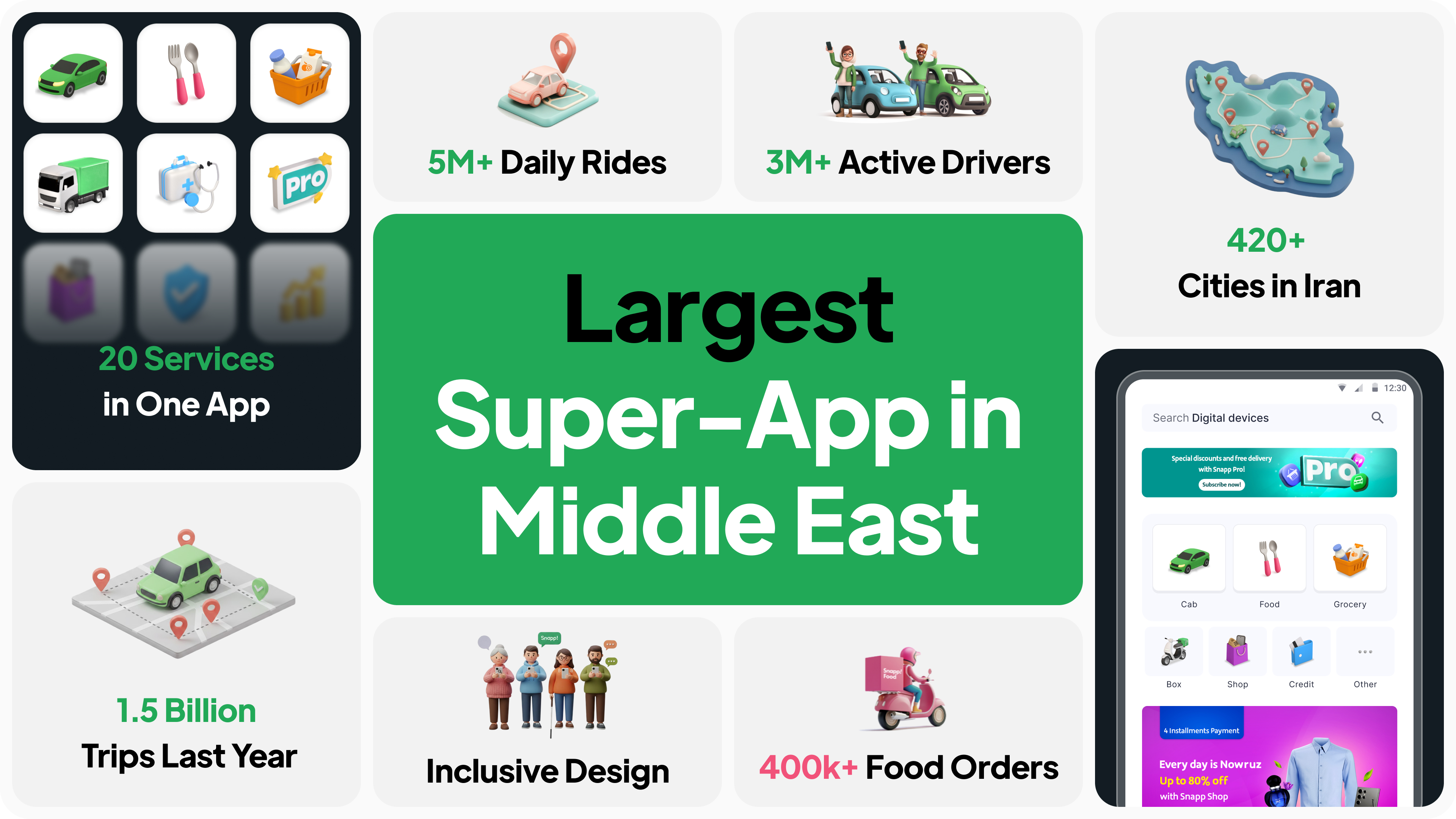
Snapp! is Iran's leading ride-hailing platform, connecting millions of passengers with drivers for convenient and affordable transportation. With over 60 million registered users, Snapp! facilitates an astounding 5 million rides per day across numerous cities in Iran. The app offers a wide range of services, from economical rides to luxury options, ensuring diverse transportation needs are met.
My Contributions
As a product designer for this project I was responsible for crafting designs, analyzing competitors, and collaborating on tests. I worked alongside a diverse team, including user researchers, fellow designers, product managers, data analysts, developers, and UX writer.
- Year: 2023
- Duration: 4 weeks
- Role: Product Designer
Problem Statement
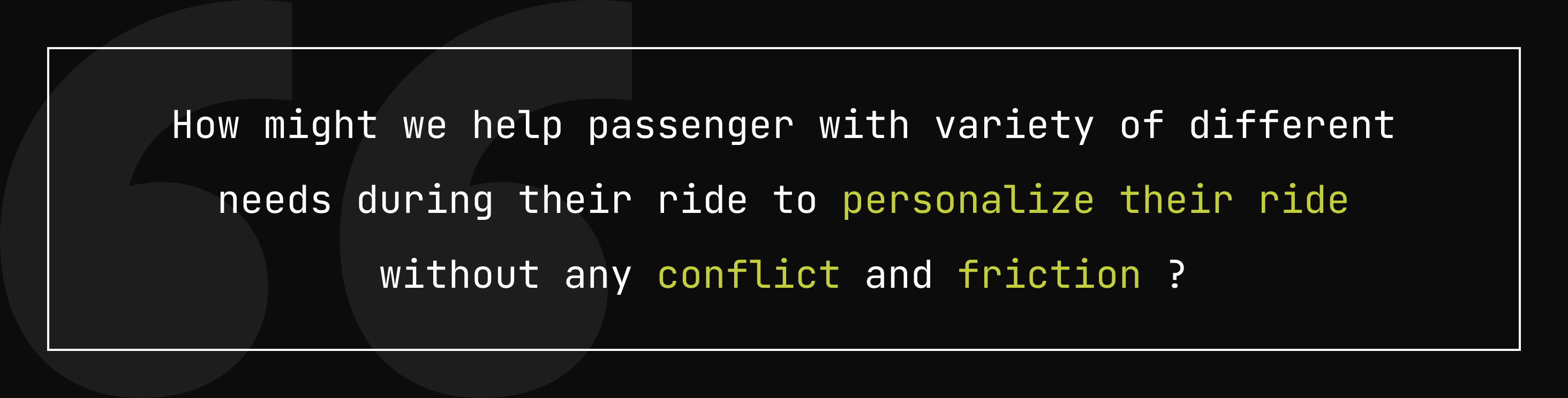
An Example about the problem
Meet Emma, a busy professional who values her privacy and comfort on the go. She regularly books rides to and from client meetings, but she often finds herself in awkward situations loud music, talkative drivers, or vehicles without the amenities she prefers. Frustrated by the lack of control over her ride experience, Emma cancels last-minute or hesitates to book, worried she won’t have a comfortable journey. This not only disrupts her schedule but also negatively impacts drivers when cancellations occur.
On the drivers’ side, many wish they could anticipate passenger needs like air conditioning, a quiet ride, or a large trunk space, so they can better serve their customers. Without clear indications of passenger preferences, drivers risk lower ratings or missed opportunities to provide a more tailored experience. Recognizing these pain points on both sides, Snapp introduced the Ride Preferences feature to let passengers specify their needs and help drivers deliver a smoother, more personalized ride.
Business Goals
- Enhance users in-app experience
- Increasing the use of Snapp Plus
- Increasing the revenue and Loyalty
User Goals
- Enhance users in-app experience
- Increasing the use of Snapp Plus
- Increasing the revenue and Loyalty
Discovery ⬖
Before diving into solutions, I ensured we aligned customer problems with our business goals. I used the Double Diamond Framework to guide our design process. In this stage, we conducted a thorough analysis by reviewing social reports, analyzing user survey responses, and running a competitive analysis.
1. Reviewing social report
By social reports we only get notified that people have some special requests.We wanted to evaluate the current ride options we have in Snapp and get an idea of what passengers and drivers would think about the options we found in special reports.
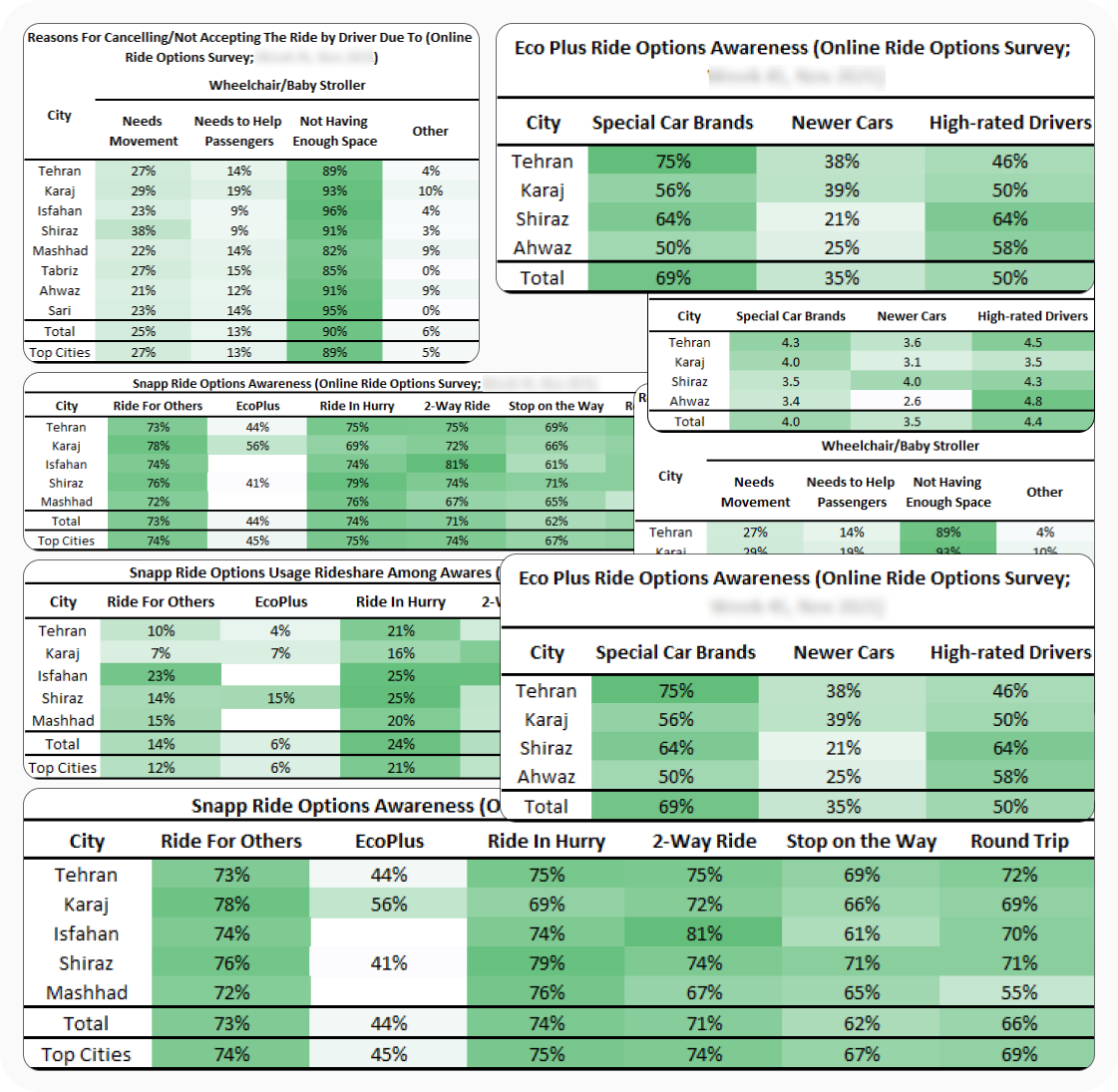
What did we want to find out?
- Users' familiarity and usage of ride options
- Ride options which passengers are most need
- The most important ride options for passengers
- Drivers' Most Used Ride Options
- Drivers would cancel rides for ride options
- Reasons for canceling a ride
2. Online survey results and Competitors!
We sent online surveys to both passengers and drivers to gain insights into their problems related to ride preferences, and we performed an in-depth competitor analysis to understand our rivals’ features and gather valuable insights.
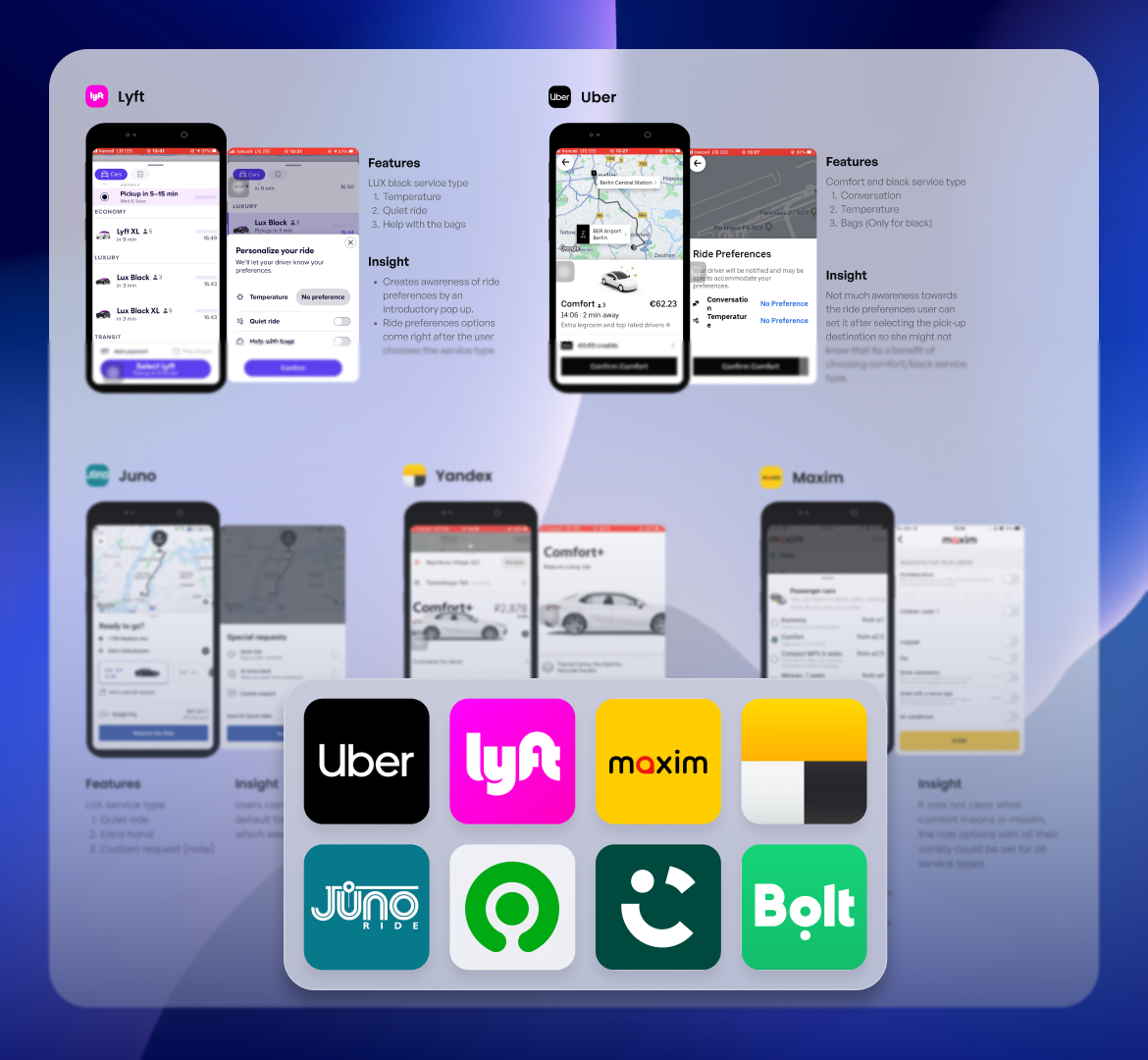
I was focusing on options they had included and for which service types they were available from Asia to US market.
Define ⬗
After I wrapped up the initial research phase, I spent time sifting through all the information and really thinking it over to figure out what mattered most.
1. Main user problems
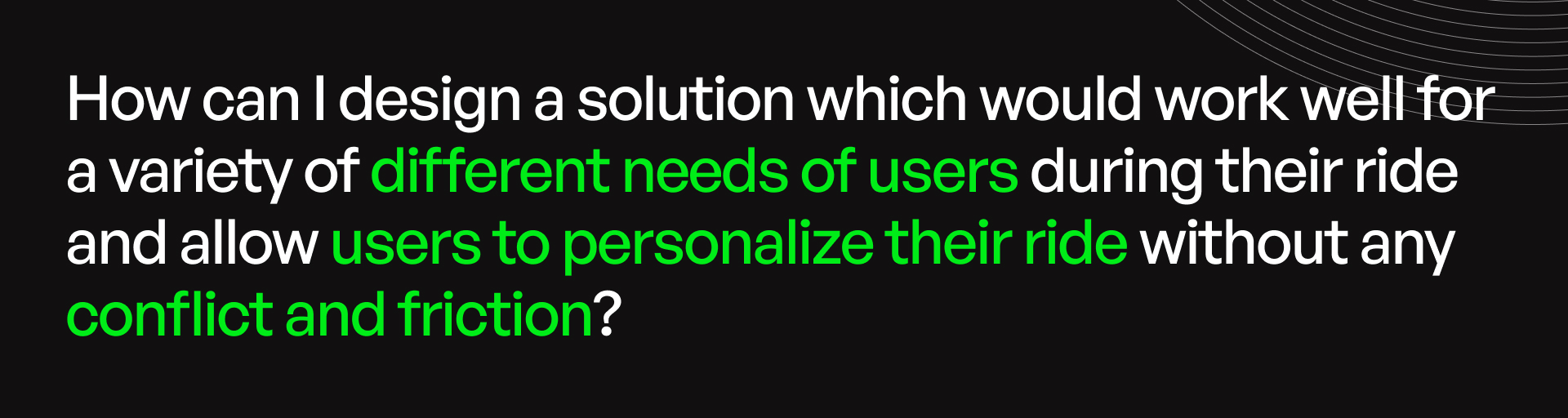
That process helped me define the biggest issues and nail down the main design challenge, setting the stage for the rest of the work.
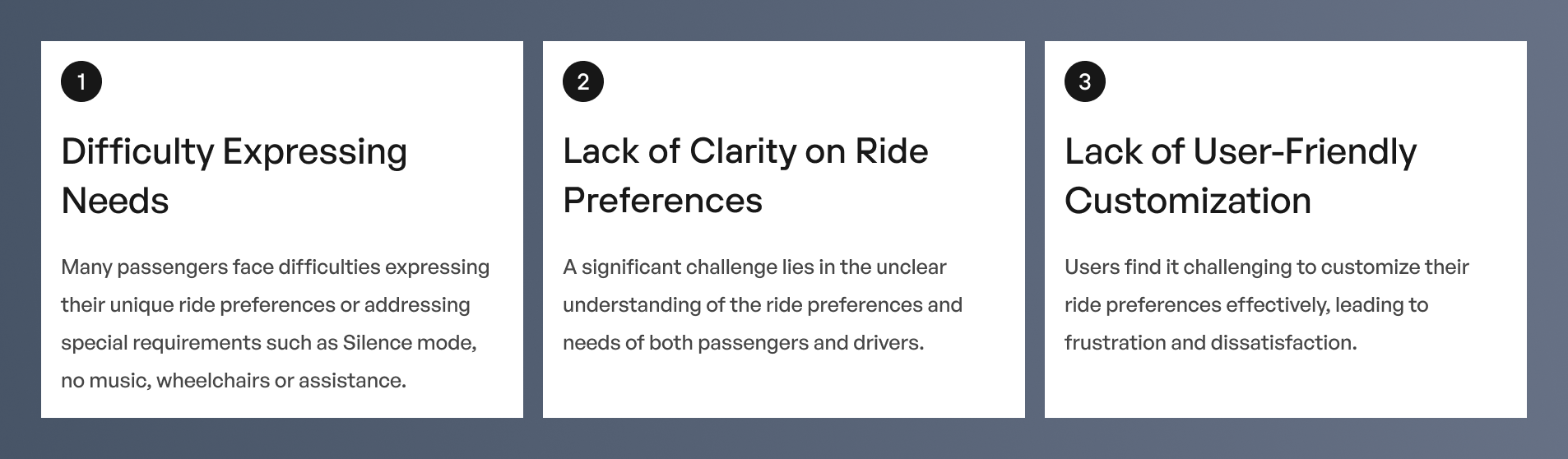
2. The Design challenge
3. Design Strategy
So we needed a clear strategy to tackle the ride preferences problem. Drawing inspiration from Aaron Walter’s user needs pyramid, we decided to build from the ground up.
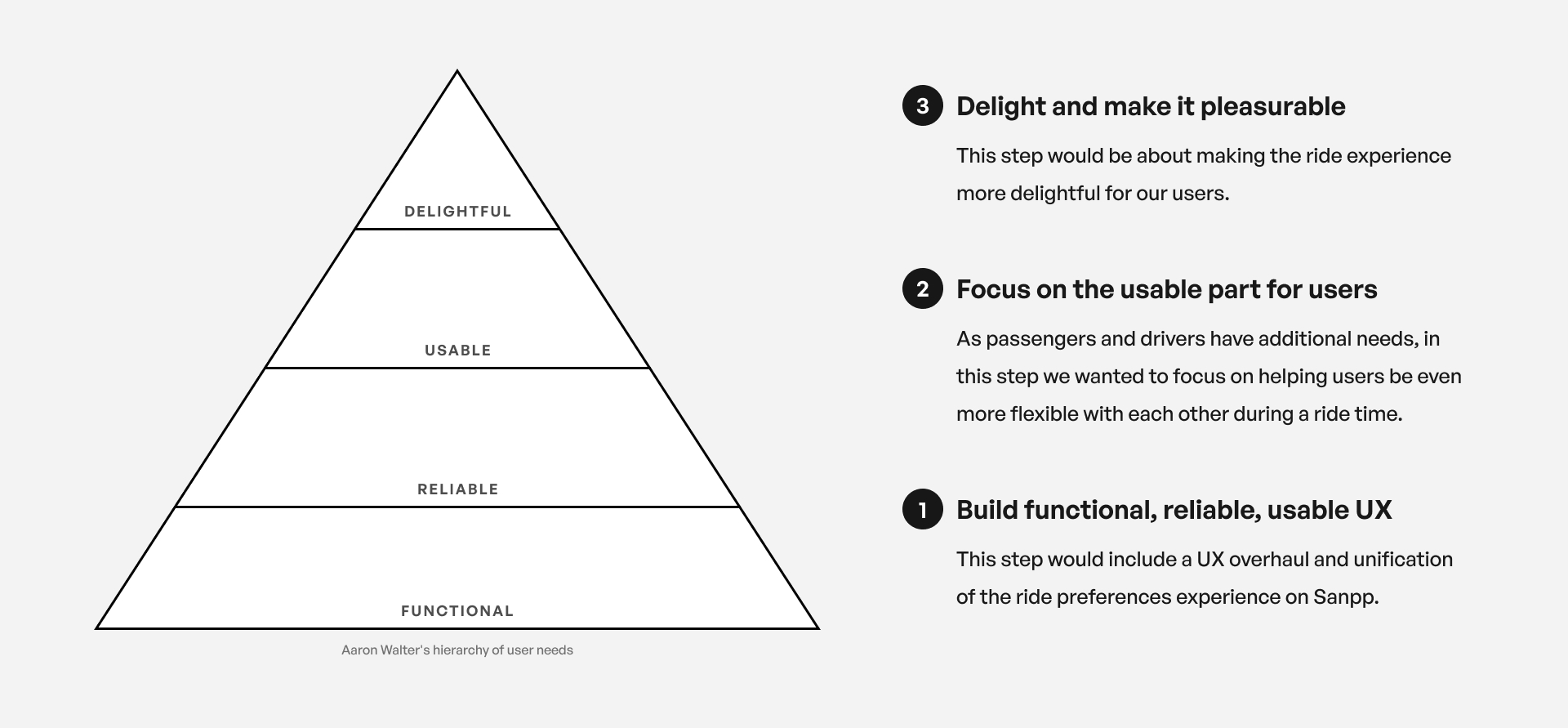
We set out to systematically address the core needs of our passengers and drivers, ensuring our approach tackled both the immediate challenges and the overarching goal of a more enjoyable ride experience.
Develop ⬖
By collaboration with stakeholders early in the design process, I ensured that less problems would come up during the design and implementation as we were able to discover business and technical limitations of which we couldn’t have known before.
1. Ideating the details of ride preferences
We have found out in the online surveys that Snapp eco plus usage and familiarity are low and as eco plus has newer cars, top-rated drivers, and better car models, there are options that we can make sure only eco plus can provide like AC.
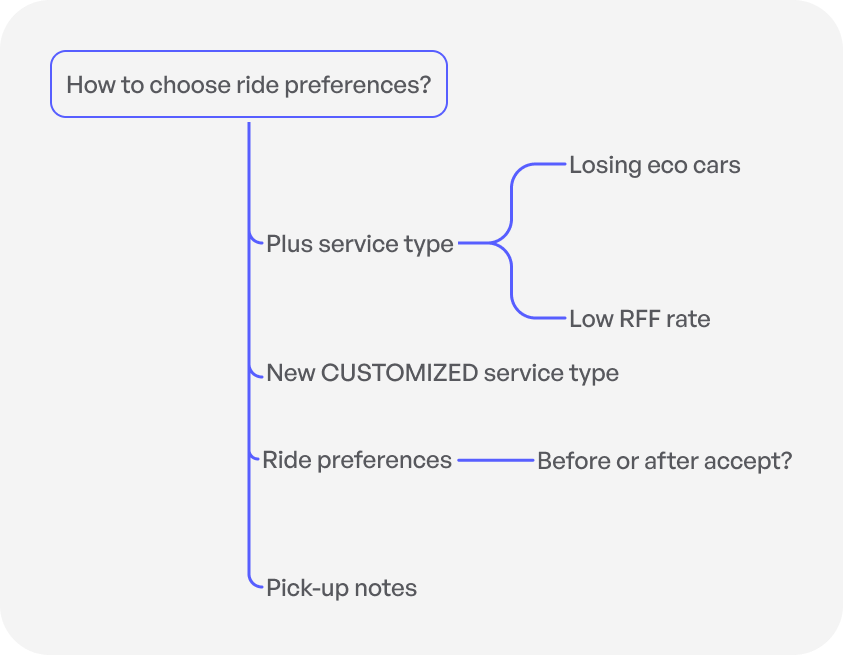
💥 Boom! that was the opportunity to only devote those items to Snapp eco plus. and the rest will be applied for all service types.
2. Listing the first ride preferences options
With insights from the social report, online surveys, and our team discussions, we put together a list of ride preferences that Snapp could realistically support. After that, we worked out exactly where and how each preference would fit into the user flow, keeping things as seamless and intuitive as possible for both passengers and drivers.

3. What did we have before?
With insights from the social report, online surveys, and our team discussions, we put together a list of ride preferences that Snapp could realistically support. After that, we worked out exactly where and how each preference would fit into the user flow, keeping things as seamless and intuitive as possible for both passengers and drivers.
4. Designing the first ideas
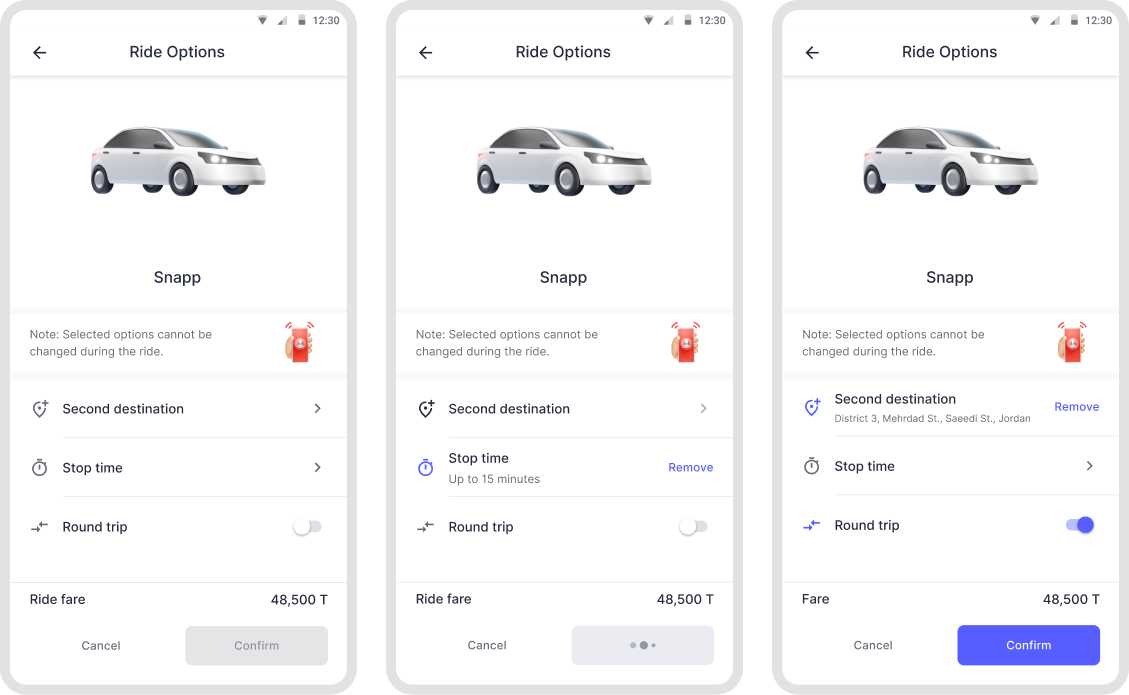
With insights from the social report, online surveys, and our team discussions, we put together a list of ride preferences that Snapp could realistically support. After that, we worked out exactly where and how each preference would fit into the user flow, keeping things as seamless and intuitive as possible for both passengers and drivers.
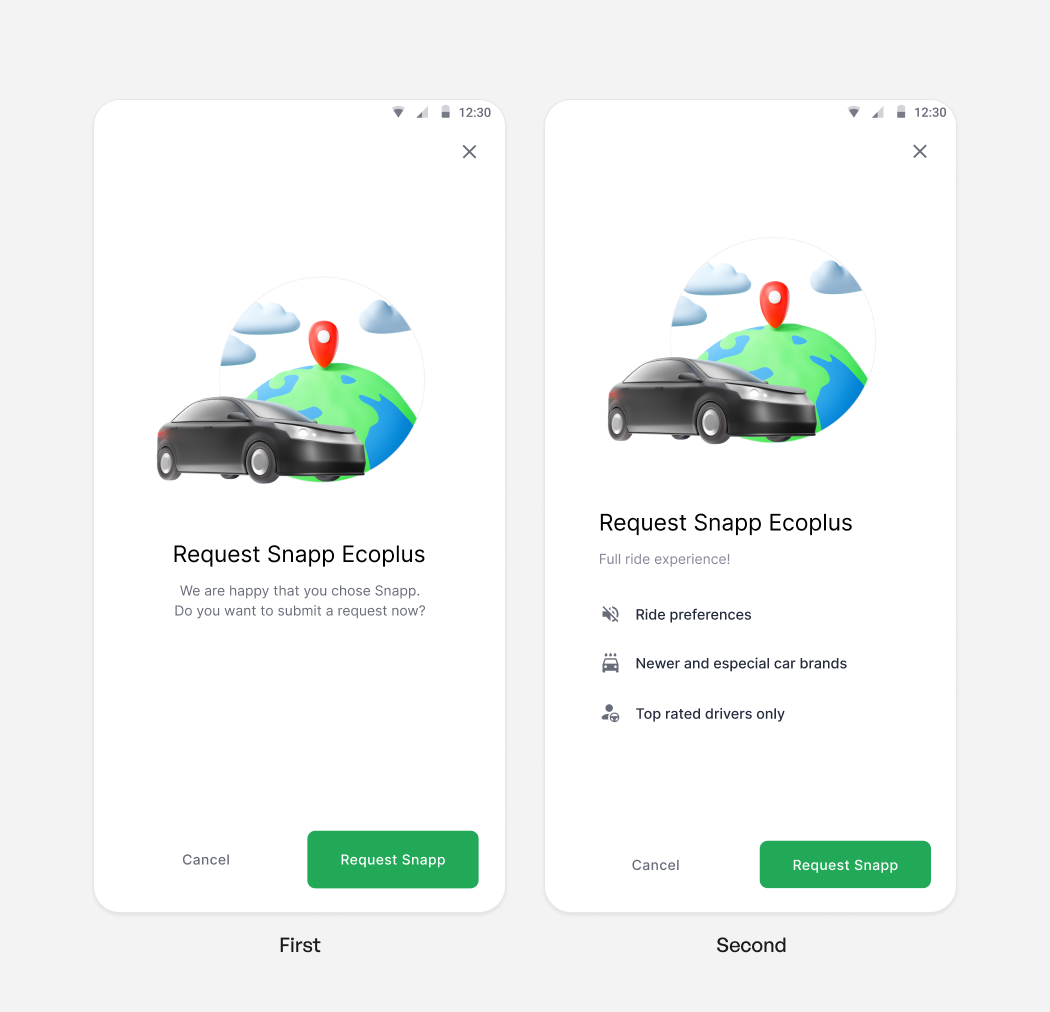
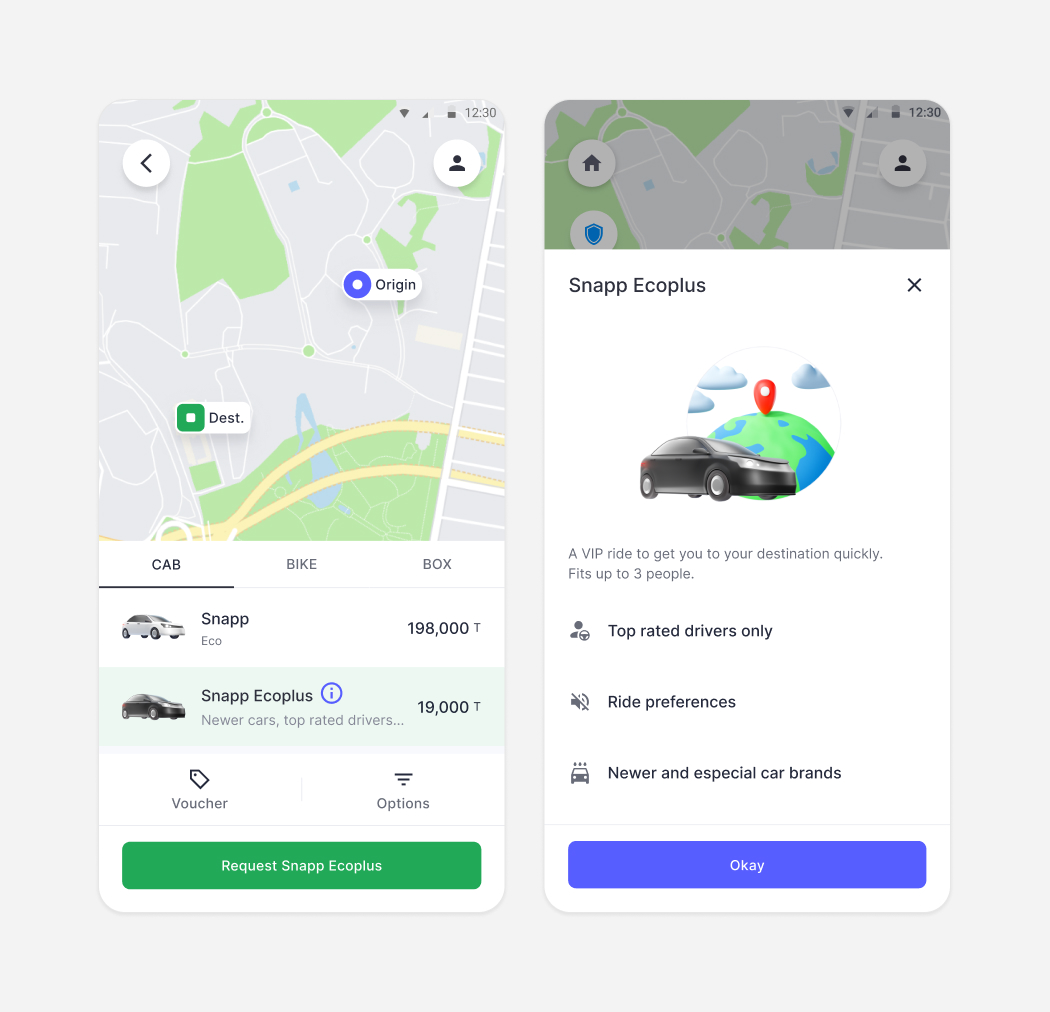
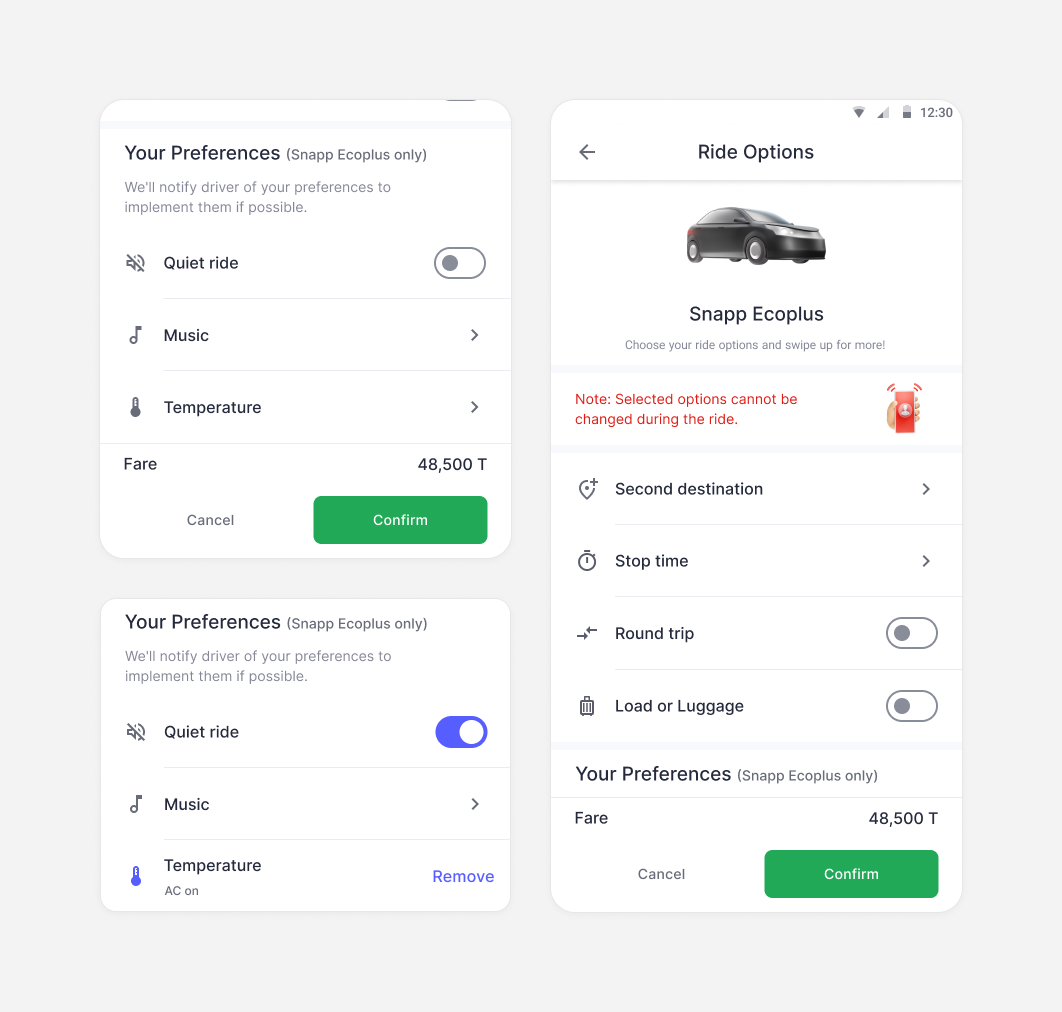
5. For Ride Options page
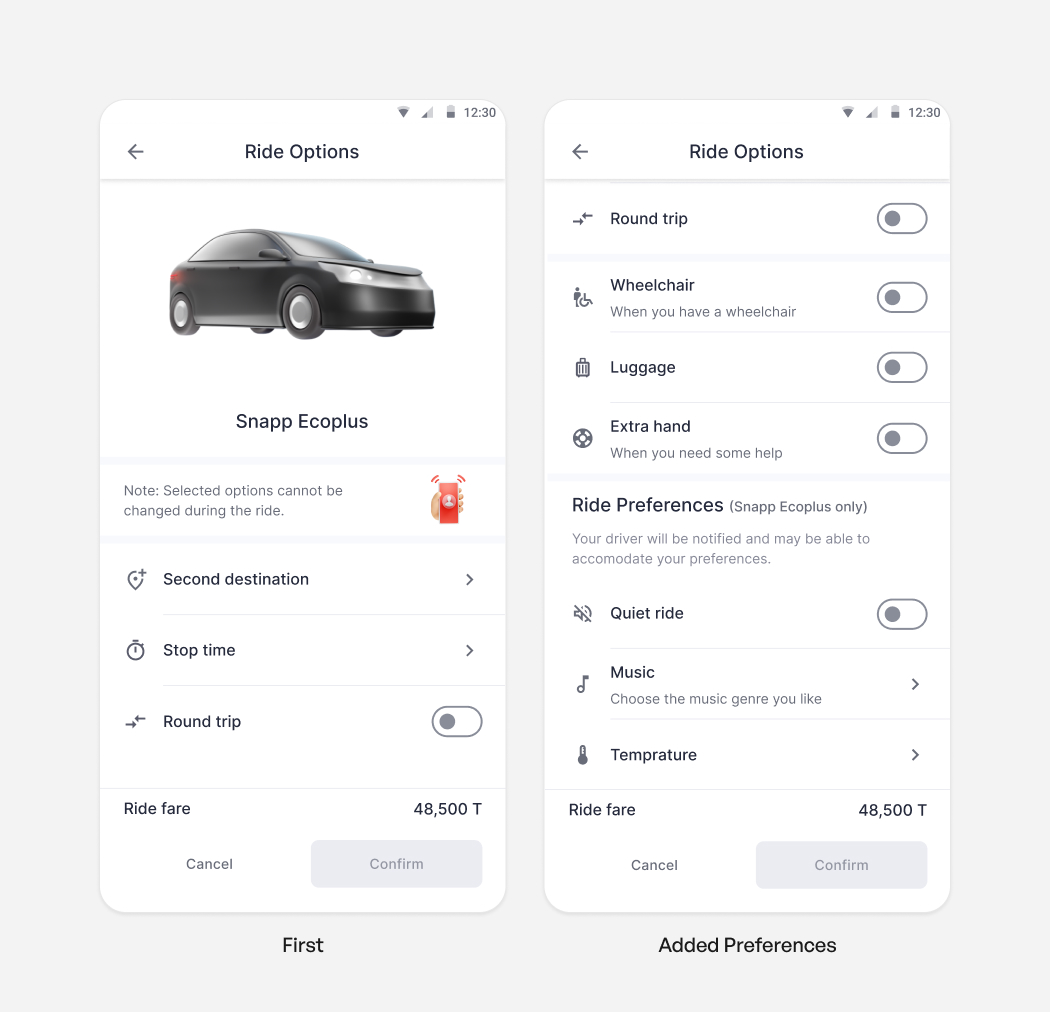
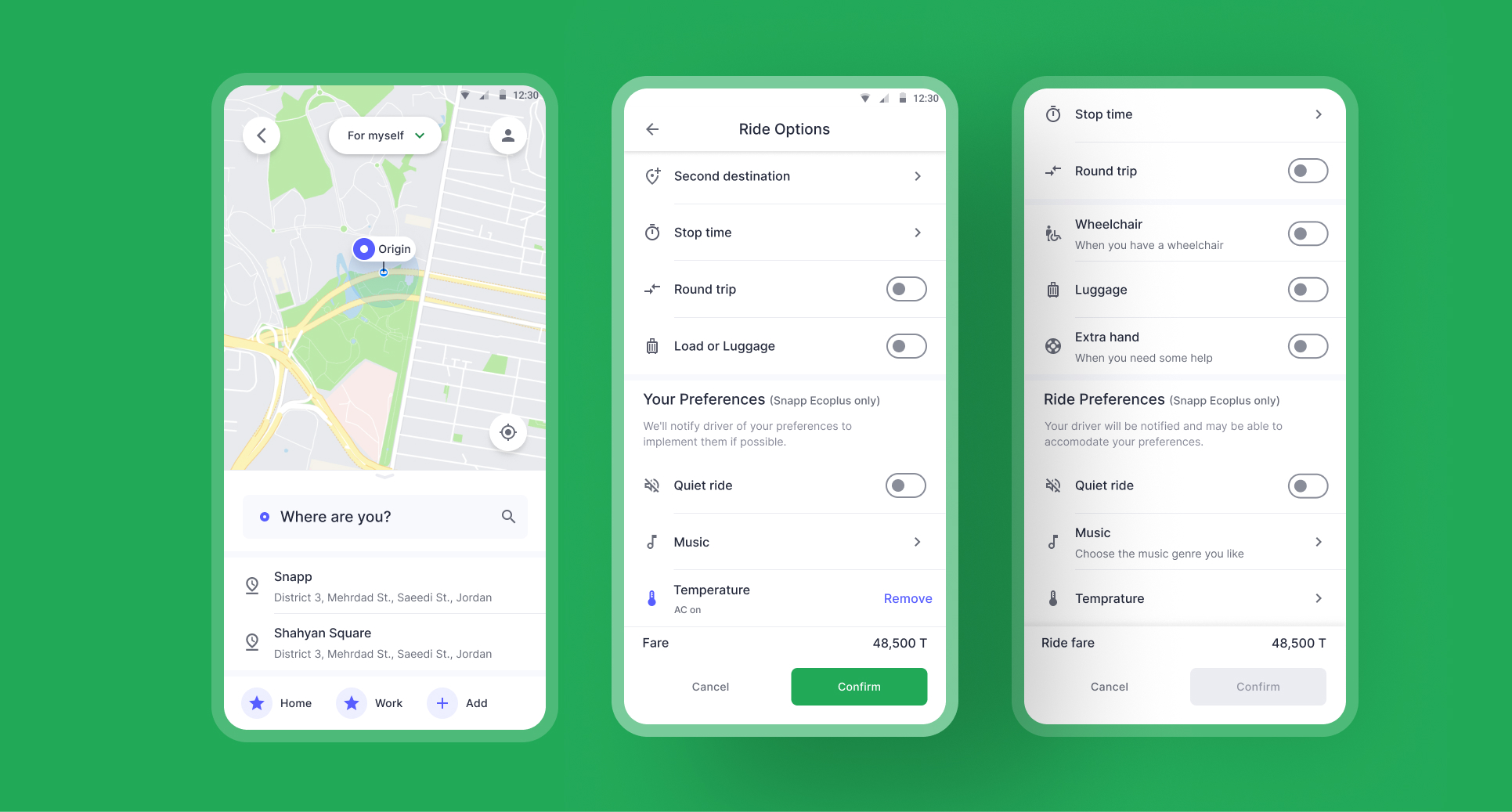
We decided to have the following options for eco plus service type:
- Silent mode
- Music
- Temperature preferences
and the rest for all service type:
- Wheelchair
- Luggage
- Need assistant
After talking to commercial team, we decided to not consider pets and cigarettes for now. Aaaand it was just the beginning each option had its own challenge!
6. Feedbacks from stakeholders and developers for MVP
From our discussions with stakeholders and the developer team, we decided to rely on existing design components to keep development work manageable and align with our current app structure. By prioritizing features that balanced user demand with technical feasibility, we could concentrate on those that offered the greatest impact right away.
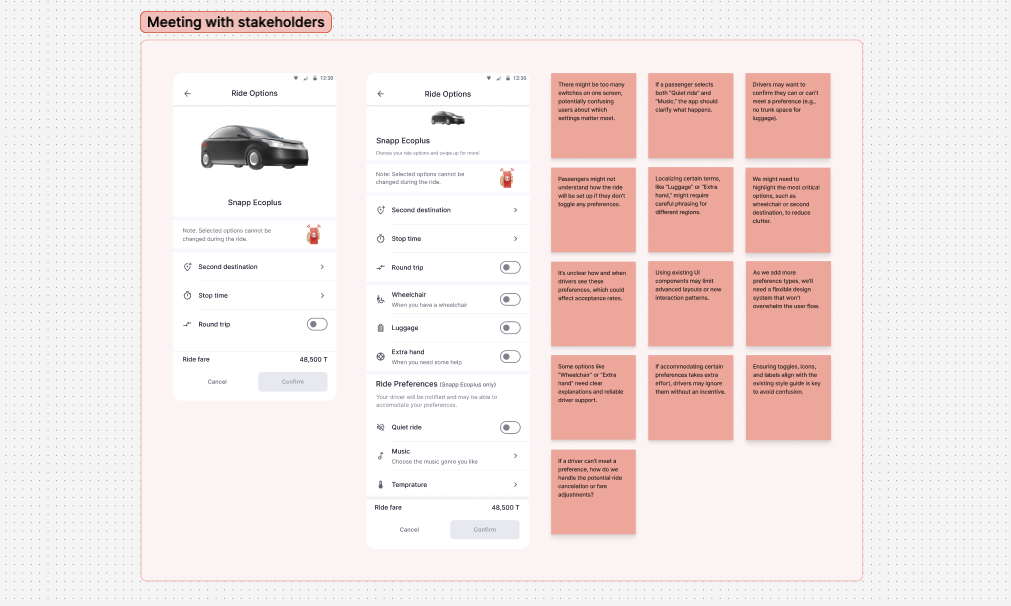
In addition, we chose to release the feature in certain cities initially, using localization as a way to tailor the experience and gather feedback before expanding further.
7. When to show the options to drivers?
After that discussion, we realized we had two main approaches for showing ride preferences to drivers. One option was to reveal these choices after the driver accepted the ride, which would keep acceptance rates steady but might cause more cancellations.
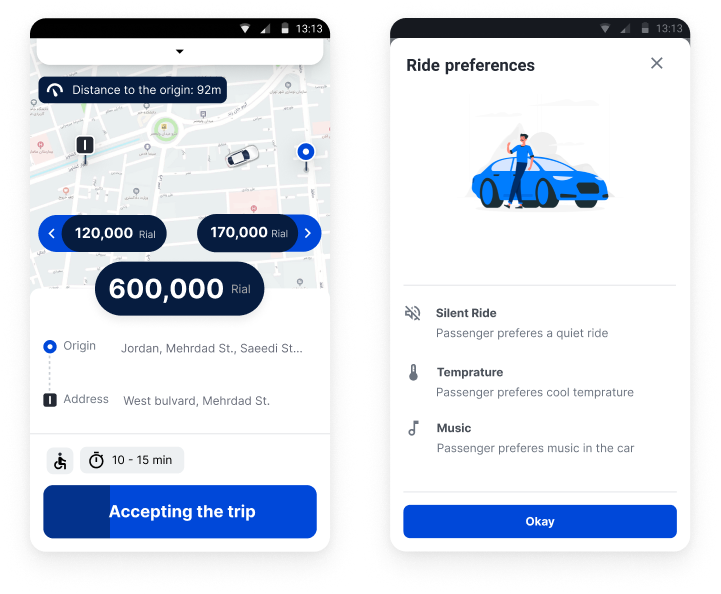
Alternatively, we could show the preferences before acceptance and charge the driver for any resulting cancellations, this would likely keep the current acceptance rate and cancellation numbers, but we’d need to monitor the outcome closely and adjust if cancellations rose after launch.
8. High-fidelity designs
After progressing to the next phase of the project, I crafted a high-fidelity prototype that accurately reflected the envisioned user interface and interaction flow. This prototype served as a critical tool for our comprehensive testing phase, where we conducted a series of tests with both passengers and drivers.
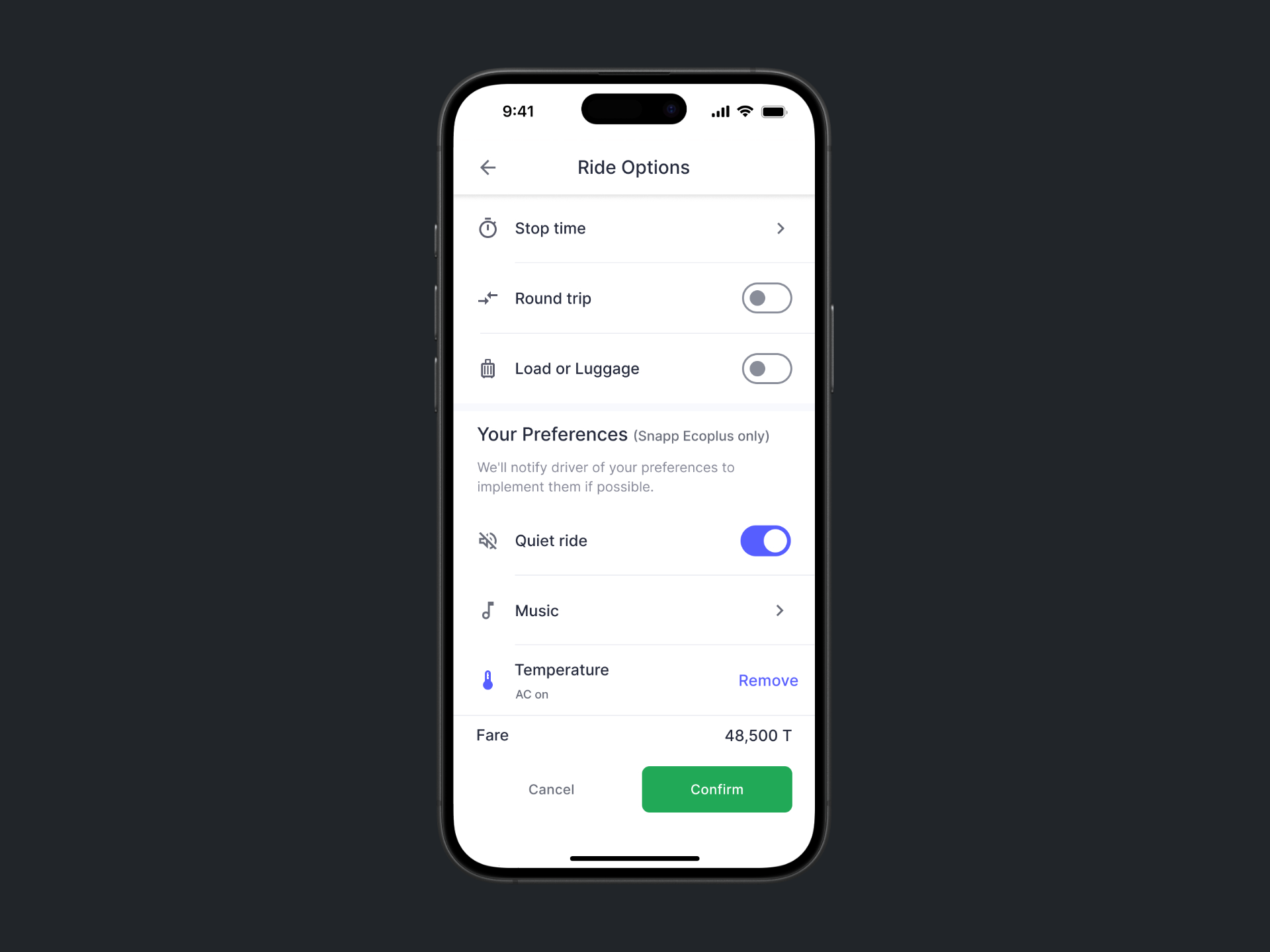
We added 4 new preferences
1. 🌡 Temperature: AC is mandatory for all Snapp services. To avoid confusion that it's only for eco plus cars, we clarified through descriptions that this feature ensures riders get a car with a working AC.
2. 🎵 Music: Music for our MVP version was kept as simple as possible just to select if they want the music in the car or not, and the rest would be dealt during the ride by passengers and drivers.
3. 🤐 Silent mode: The most sensitive item due to driver's interviews and most asked from users, we decided to keep it but handle it in writing in a way that it's the least offensive for drivers.
4. 🧳 Load or luggage: By giving passengers a way to indicate they have luggage or extra cargo, drivers can plan accordingly, ensuring drivers aren’t caught off guard and passengers can bring essential items with minimal confusion.
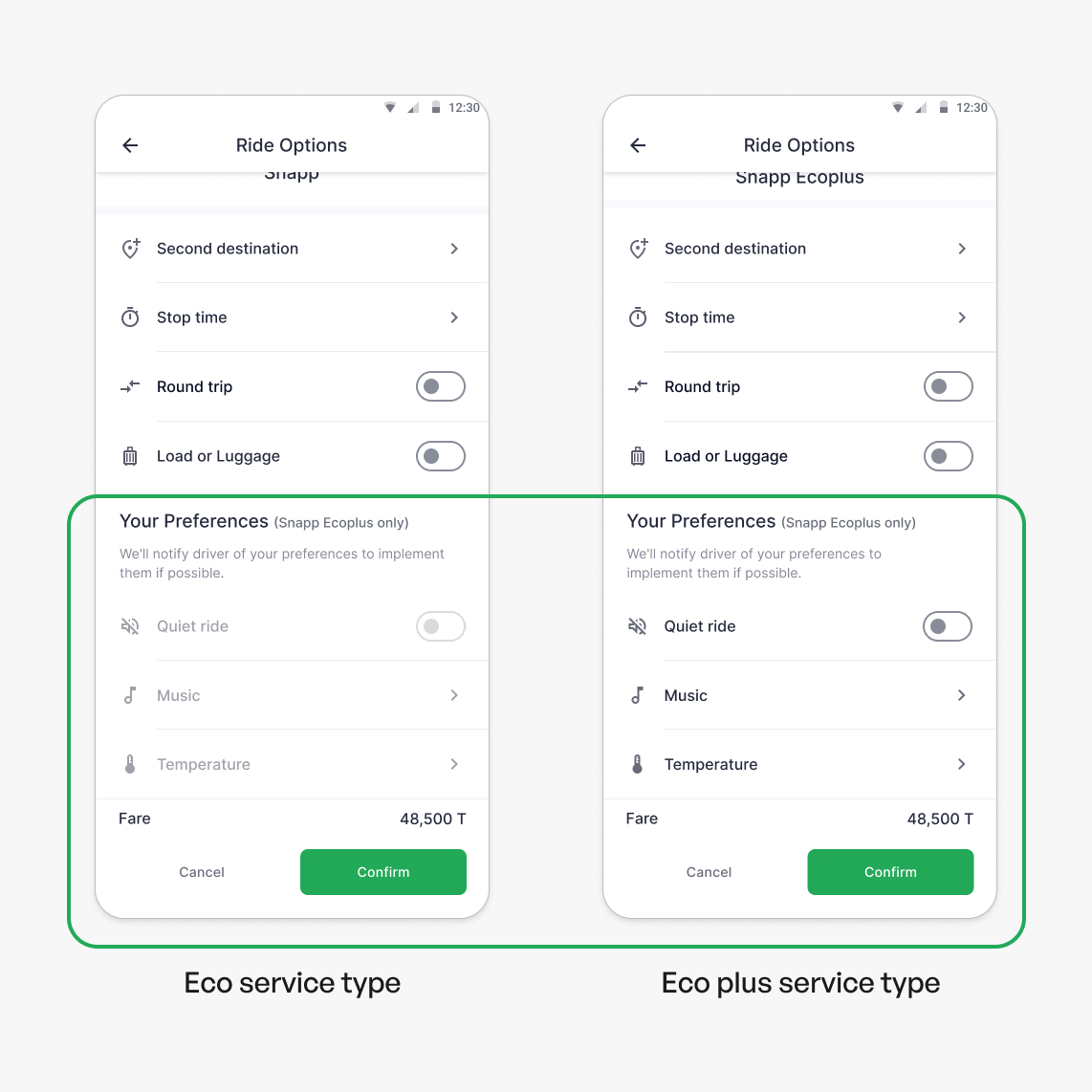
What about Awareness?
To raise awareness about ride preferences among all users, I integrated these options into the eco service type interface, displaying them as disabled. This approach visually informs users of the available preferences, enhancing their understanding without enabling selection for eco rides.
Post-Ride and Rating ⭐
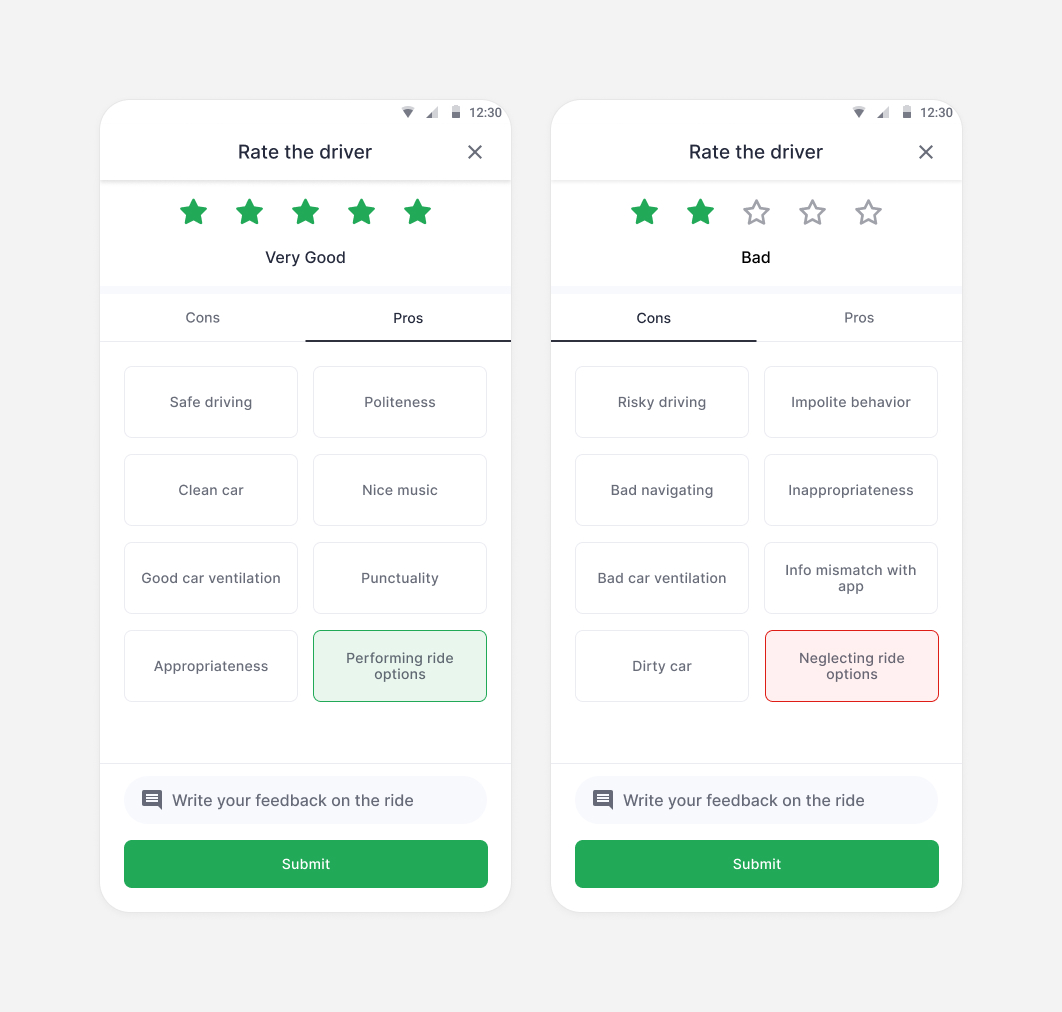
To keep track of how well drivers honor passenger preferences, we added a dedicated item in the rating options. This not only reassures users that their requests are noted and monitored, but also encourages drivers to meet those preferences, reinforcing a sense of care and accountability throughout the ride.
Is This Thing Working?! 🚬
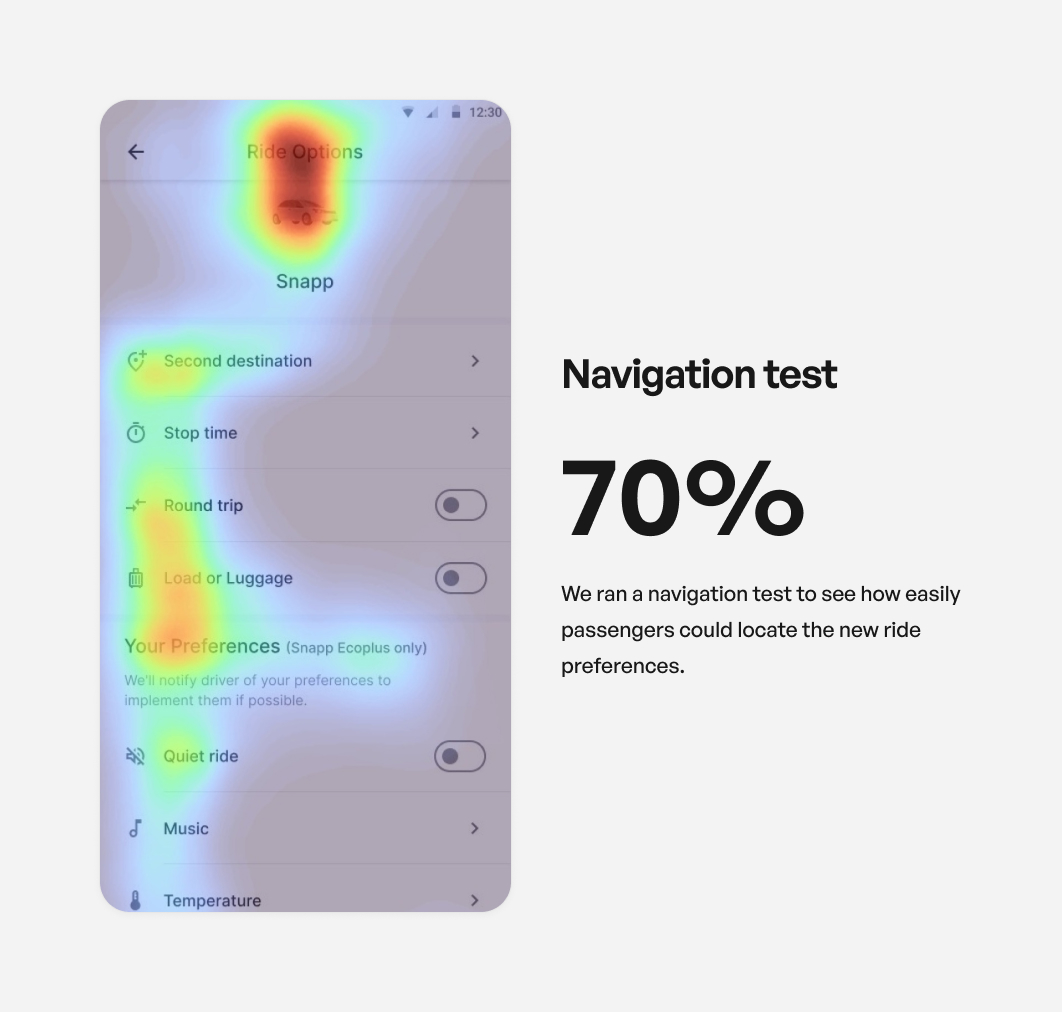
To ensure that our newly introduced Ride Preferences were easily discoverable and intuitive for users, we conducted a navigation test. The results showed that 70% of participants successfully found the Ride Preferences feature during the test, which aligned with our product team’s benchmark for findability. With this positive outcome, the team felt confident that the redesigned Ride Preferences would effectively guide users toward personalized ride options.
Impact ⬖
Implementing ride preferences resulted in more informed and smoother interactions between passengers and drivers. Users were able to specify their needs easily, while drivers received clearer instructions, leading to fewer misunderstandings and enhanced ride experiences.
Overall, these changes contributed to a more seamless booking process and improved user satisfaction on both sides.
Looking back 📝
1. Dive deep and ship fast: The experiments and research we conducted significantly boosted my confidence in designing the product and determining the best direction for this feature.
2. Explore, iterate, iterate: Iterating during user testing was definitely challenging. However, staying up late to refine prototypes was worth it when I saw the final results of the feature and design.
3. Be adaptable. Prioritize. Delegate: The requirements changed multiple times, and engineers frequently raised technical limitations as they evolved. Through this, I learned to adapt to shifting demands, prioritize my daily tasks, and delegate responsibilities effectively.


Lorem Ipsum is simply dummy text of the printing and typesetting industry. Lorem Ipsum has been the industry's standard dummy text ever since the 1500s, when an unknown printer took a galley of type and scrambled it to make a type specimen book. It has survived not only five centuries, but also the leap into electronic typesetting, remaining essentially
Next Project